
Test Your English: Interested vs. Interesting
Sep 18, 2022

Master the difference between “interested” and “interesting” in this clear and comprehensive ESL grammar lesson. This video explains how -ed and -ing adjectives work in English, helping you avoid one of the most common mistakes made by English learners.
You’ll learn the key concept of perception—when to describe the person (interested) and when to describe the thing (interesting). With easy examples like “I am interested in the movie” vs. “The movie is interesting,” this lesson makes grammar simple and practical.
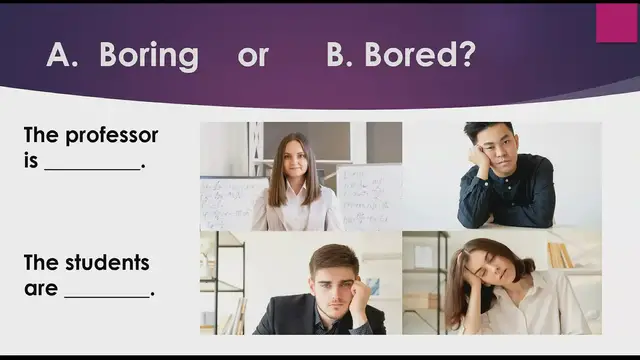
The video also covers a wide range of similar adjective pairs such as bored/boring, excited/exciting, tired/tiring, and amazed/amazing, along with how to use them correctly with linking verbs like be, seem, and appear. You’ll also explore common collocations (e.g., interested in, worried about, confused about) and learn how these words function as adjectives, verbs, and even nouns.
Perfect for beginner to advanced ESL learners, this lesson includes explanations, examples, and practice exercises with answers to reinforce your understanding.
👉 In this lesson, you will learn:
The difference between interested vs. interesting
How to use -ed vs. -ing adjectives correctly
Common adjective pairs in English
Linking verbs and sentence structure
Essential English collocations
Improve your grammar, expand your vocabulary, and speak English more naturally with this essential ESL lesson.
Now you can learn English quickly by yourself at home for free step by step! This video gives you a topic for conversation, something to speak about, as well as some words and phrases to use. Great for teachers and students of English as a second language (ESL) both in the classroom and as self-study. This is a "Cloze" or fill-in-the blank quiz that tests your listening, reading, grammar, and vocabulary. Good luck.
Show More Show Less #Jobs & Education